Disclosure: This post contains affiliate links. If you use these links to buy something we may earn a commission. As an Amazon Associate I earn from qualifying purchases.
Ever bought cheese for a party and suddenly worried your friends will judge how you cut it? Me too. Luckily, a few easy rules cover almost every cheese you’ll put on a board.
Three rules
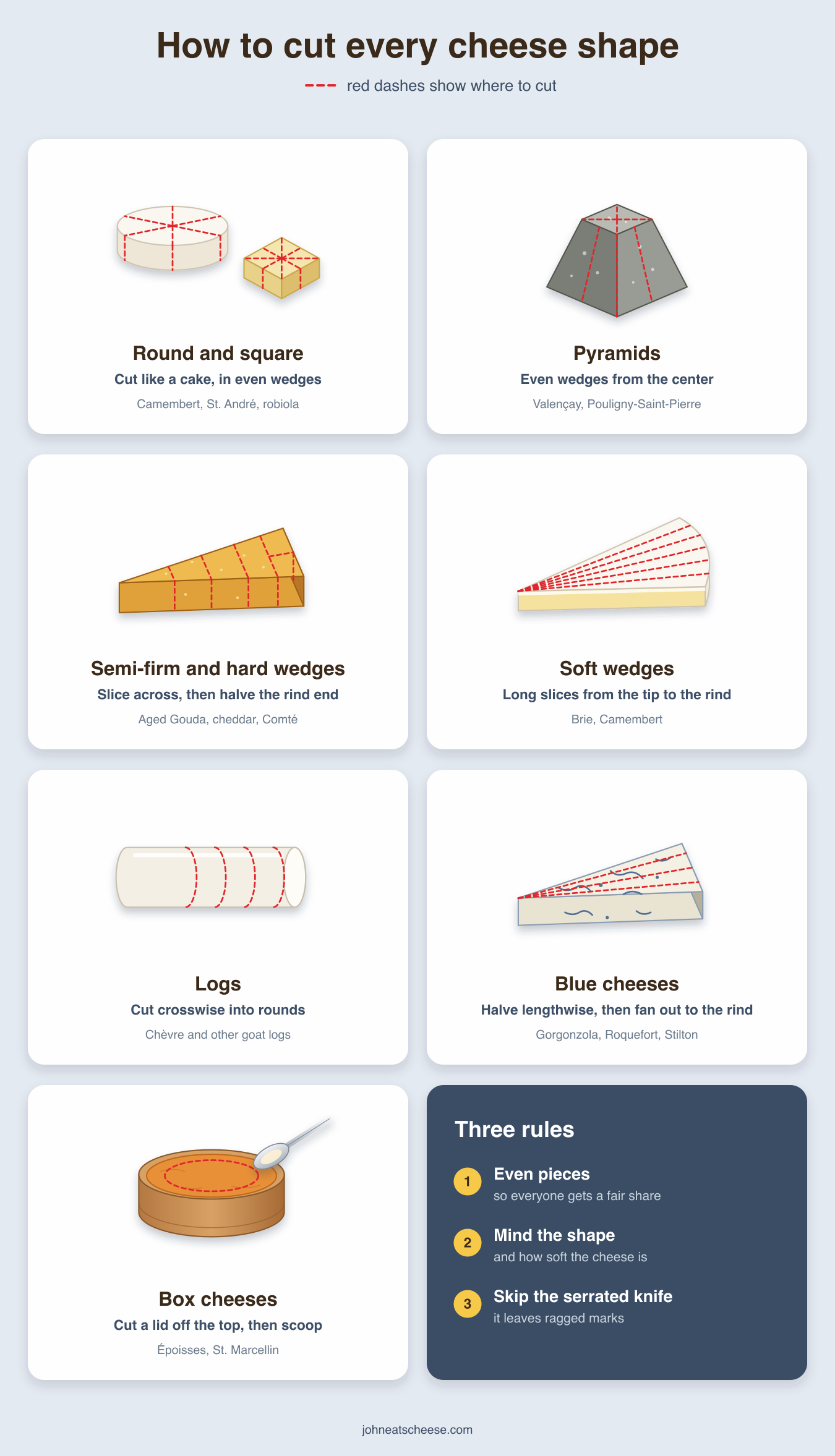
- Cut even pieces. You don’t need a ruler, but everyone should get a fair share.
- Mind the shape and texture. A wheel, a wedge, a log and a box each get cut a little differently. The diagrams below show how.
- Use a proper cheese knife. Most kitchen knives are serrated, and a serrated edge leaves ragged marks. A good set of cheese knives (Amazon) is worth it.
The first cut and the second cut
Cheeses made in big wheels usually get cut twice. The first cut divides the wheel into wedges for sale, and that’s the cheesemonger’s job. The second cut is yours: turning a wedge into pieces to serve. Smaller cheeses, like Camembert or a log of chèvre, only get one cut. Here’s how to make it, shape by shape.
Round and square cheeses
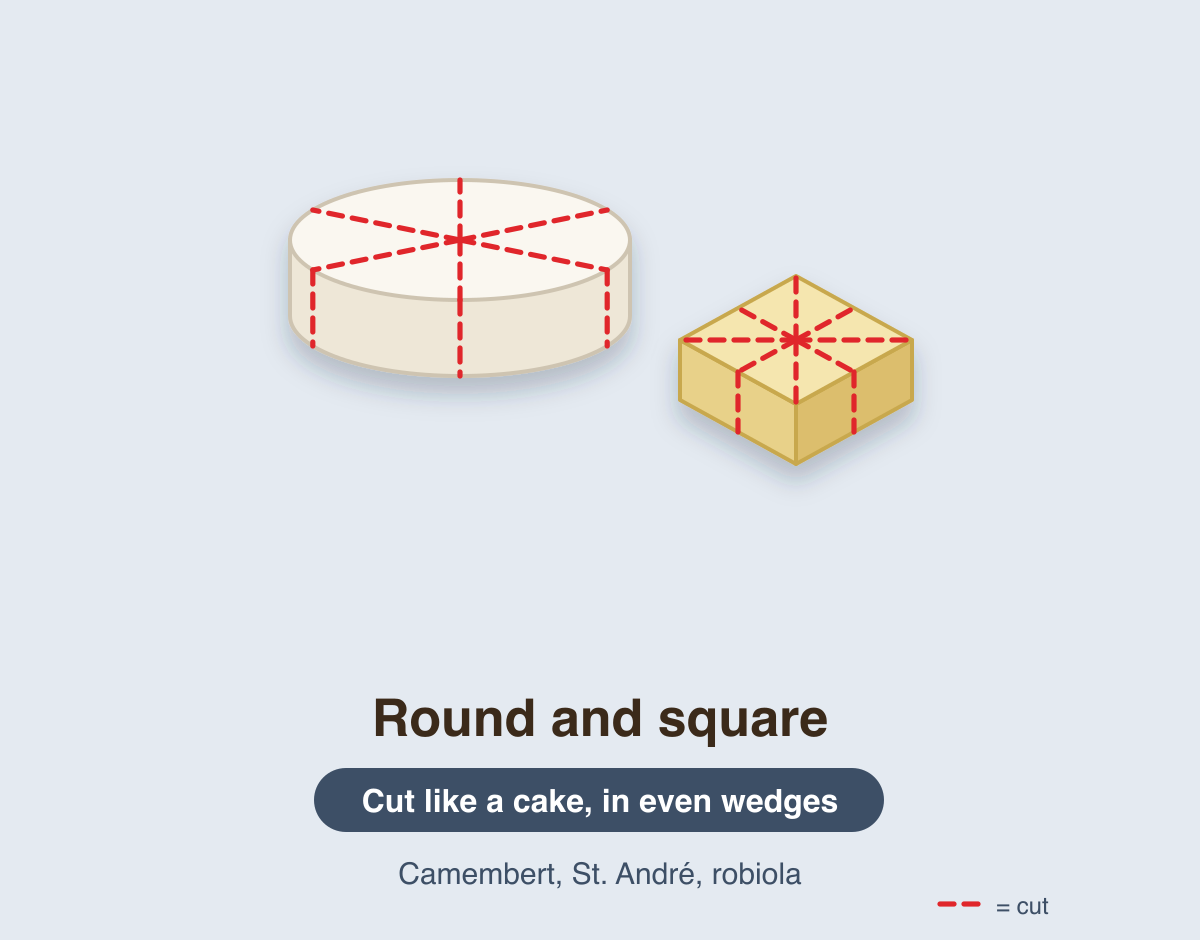
Small wheels, round or square, like Camembert, St. André and robiola, are cut like a cake, in even wedges.
Pyramids
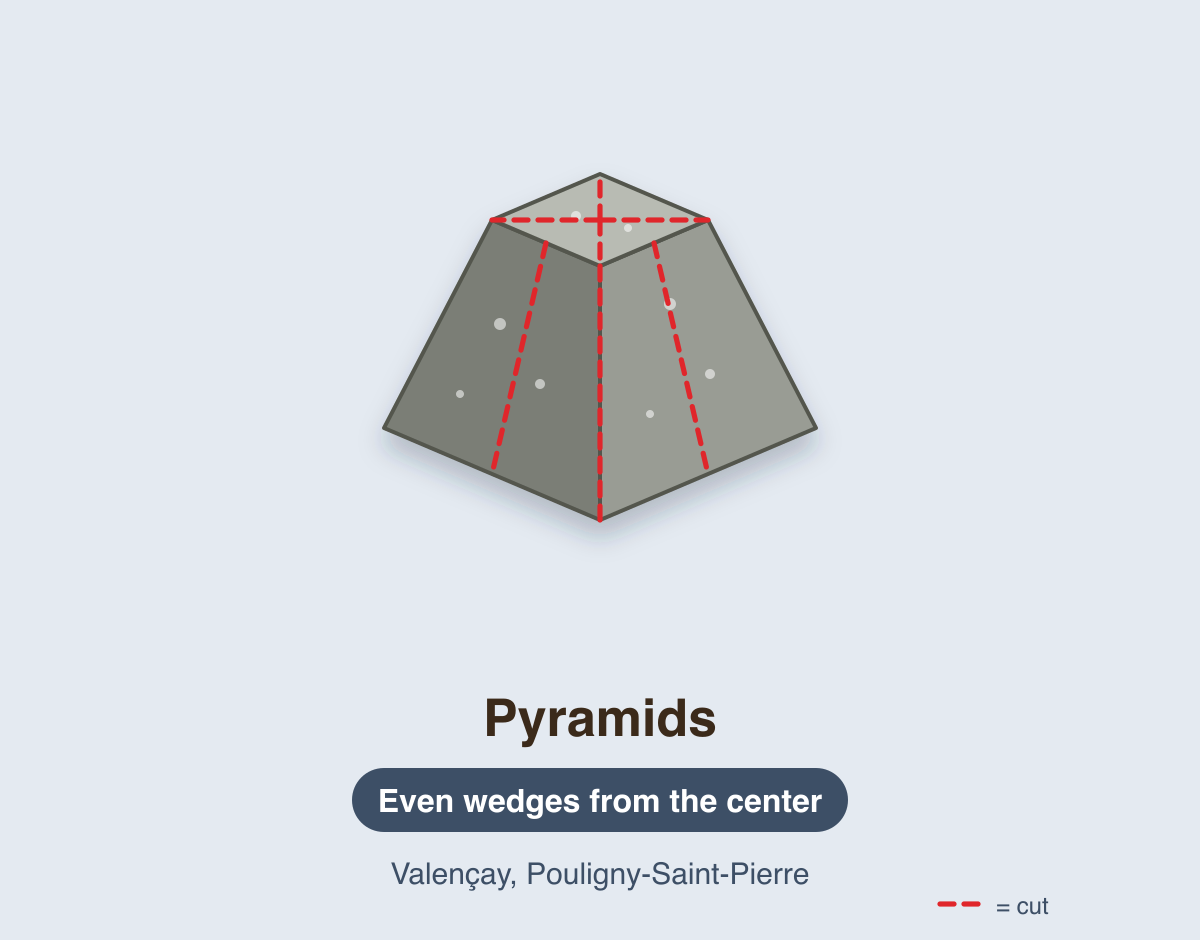
Pyramid cheeses like Valençay and Pouligny-Saint-Pierre are cut the same way: even wedges from the center, as if you were cutting a cake.
Semi-firm to hard wedges
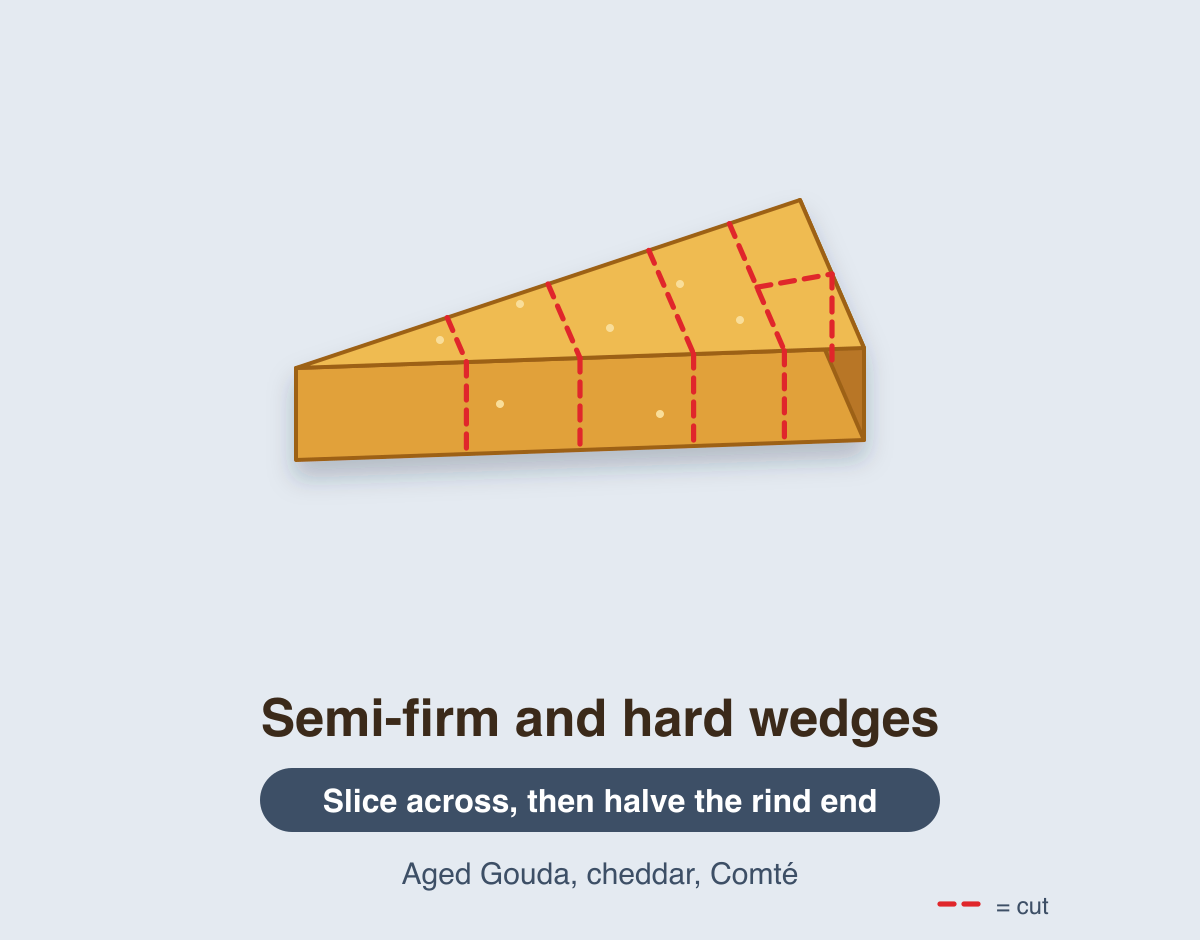
Hard cheeses like aged Gouda, cheddar and Comté are sliced across the wedge. Cut the end piece, the one with the rind, crosswise into two even pieces.
Soft wedges
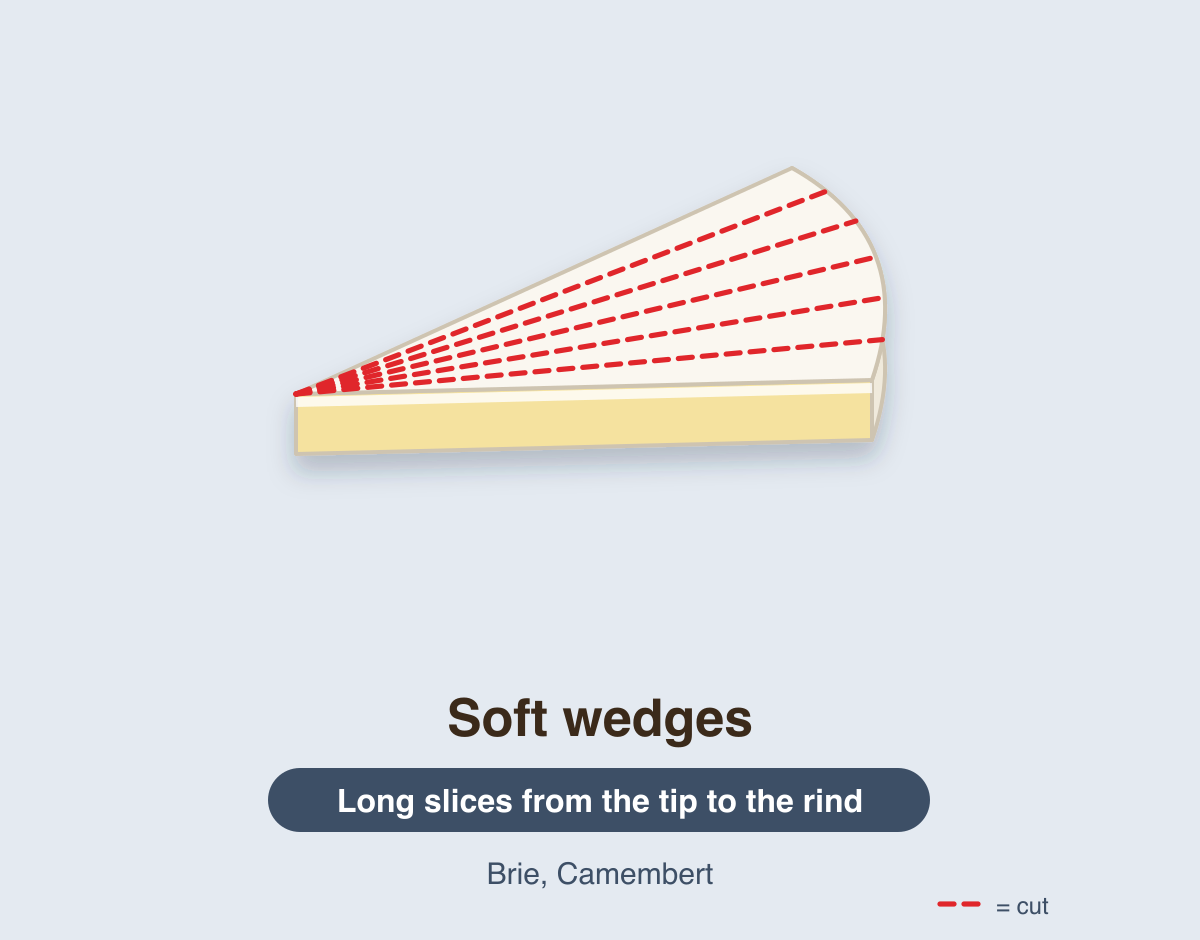
Soft-ripened cheeses like Camembert and Brie are too gooey inside for many options, so cut long, thin slices from the tip to the rind. Just don’t cut the tip off on its own: see How do you cut different cheeses?
Logs
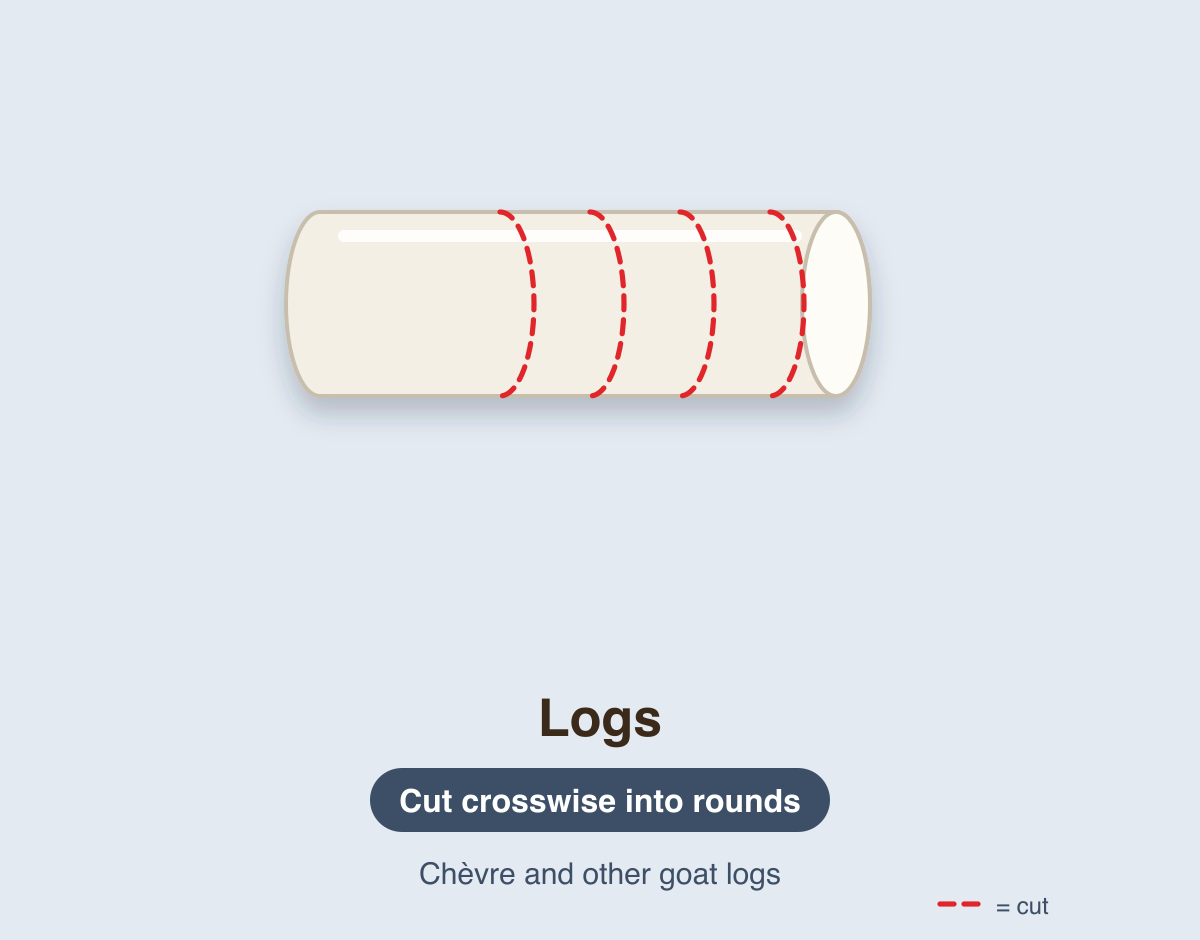
Logs like Innes Log or any kind of chèvre are cut crosswise into rounds.
Blue cheeses
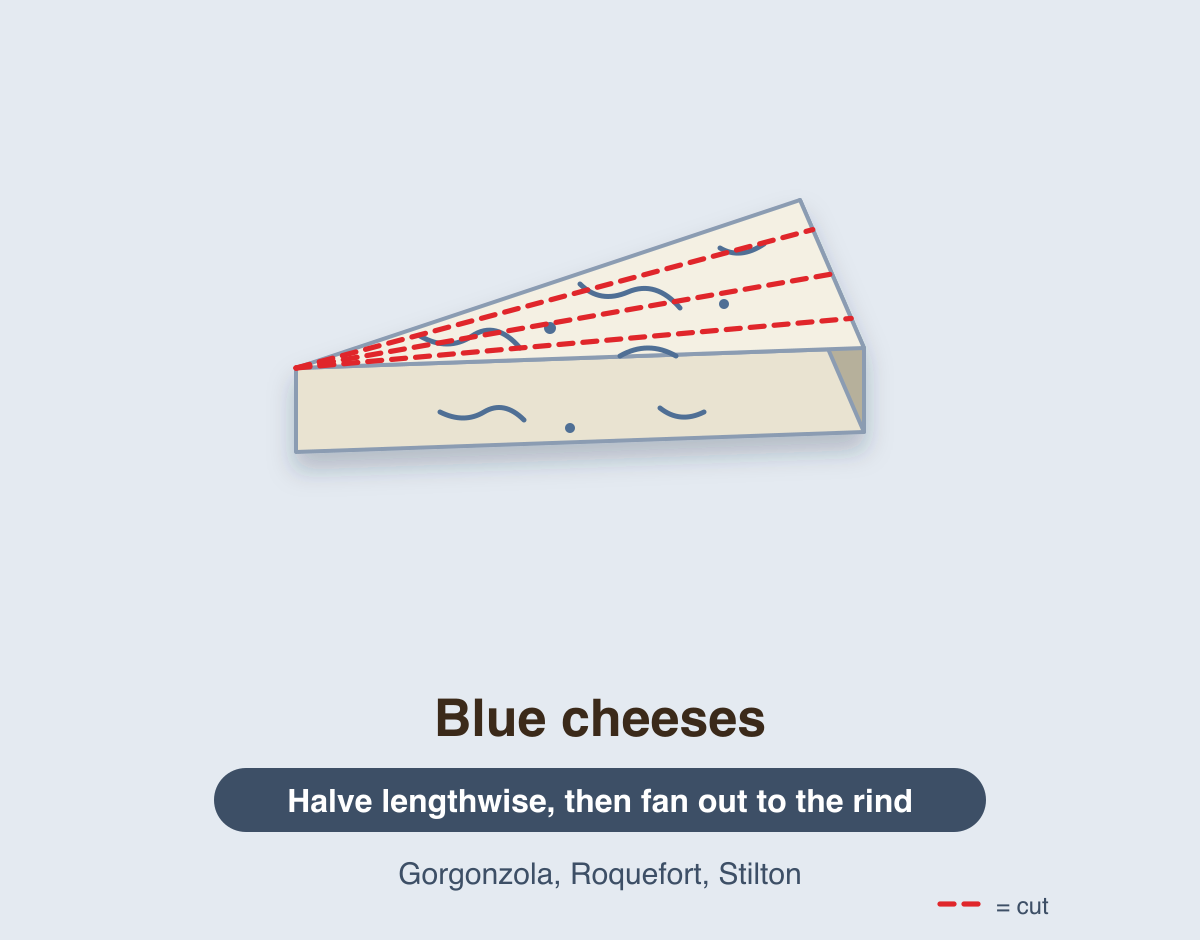
Blue cheeses like Gorgonzola, Roquefort and Stilton are cut in half lengthwise, then into slices that fan out to evenly spaced points along the thick edge of the wedge.
Box cheeses
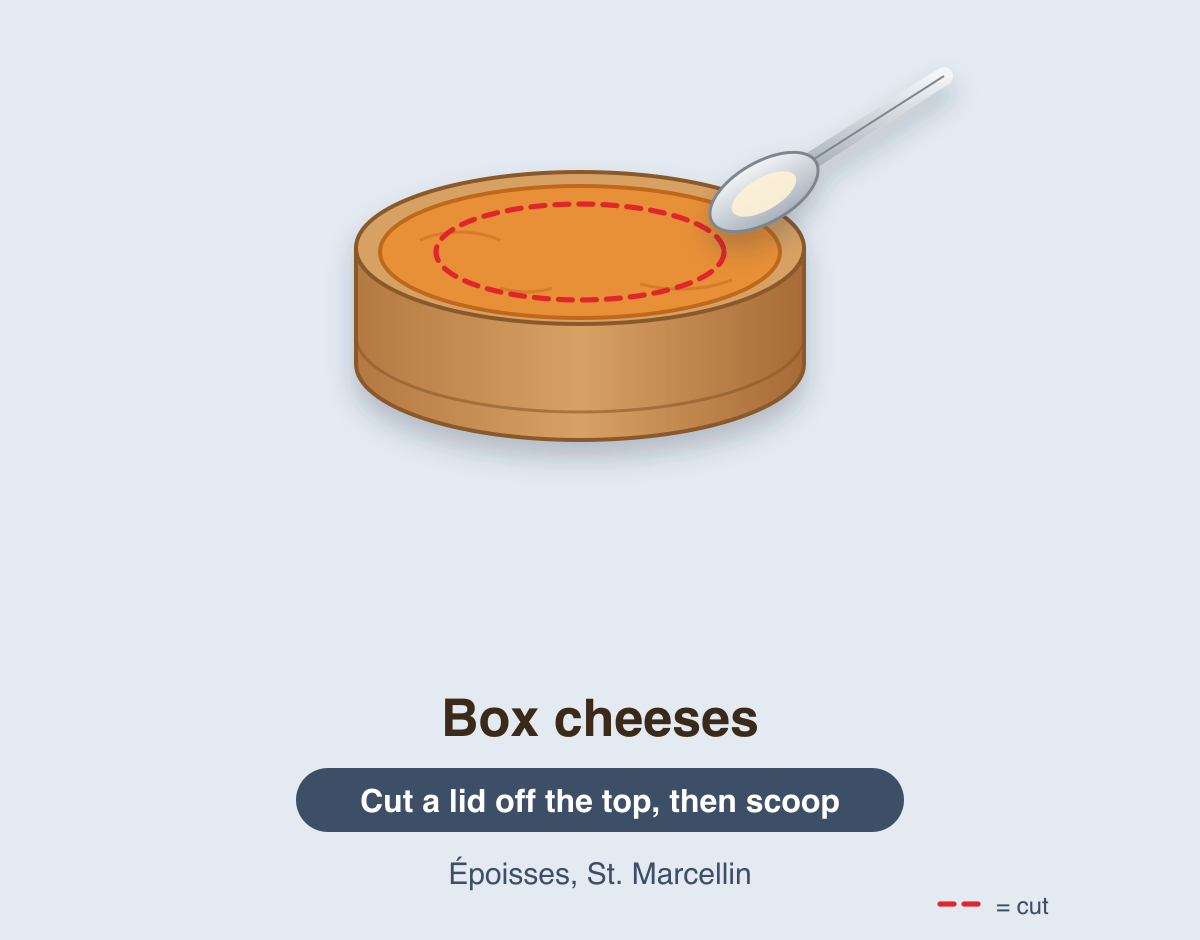
For cheeses that come in a box, like Époisses or St. Marcellin, cut a circle in the top and lift it off. Then scoop the cheese out with a spoon, using the rind as a bowl.
Wrapping up
Even pieces, the right knife and a cut that fits the shape. That’s all there is to it. Putting a whole board together? See How do you build a cheese board?